How to Run Meta's Muse Glimmer AI Model on Your Own Computer
Every AI chatbot most people use lives on someone else’s server. You type a message, it travels to a data center, and an answer comes back. That’s convenient until the service goes down, changes its pricing, or you’d rather your conversations never left your laptop in the first place.
This week, Meta gave people a real alternative. Muse Glimmer, a new 30-billion-parameter model distilled from Meta’s flagship system, is free to download, runs on a single consumer graphics card, and ships under a license that lets you use it for almost anything. It’s built specifically for agentic work — the kind of multi-step task where an AI needs to plan, use tools, and follow through, not just chat. Here’s what makes that different, and how to get it running on your own machine in the next few minutes.
What Is an Open-Weight Model, Really?
Most people assume “using AI” means opening an app and sending a question to a company’s servers. That’s true for ChatGPT, Claude, and Gemini — you’re a guest on infrastructure you don’t control.
An open-weight model flips that. Meta publishes the actual trained parameters — the numbers that make the model work — and lets anyone download them for free. Once the file is on your computer, the model runs entirely on your own hardware. No account, no per-message cost, no data leaving your machine. Muse Glimmer is released under an Apache 2.0 license, one of the most permissive terms available, so you can use it commercially, modify it, or build on top of it without asking anyone’s permission.
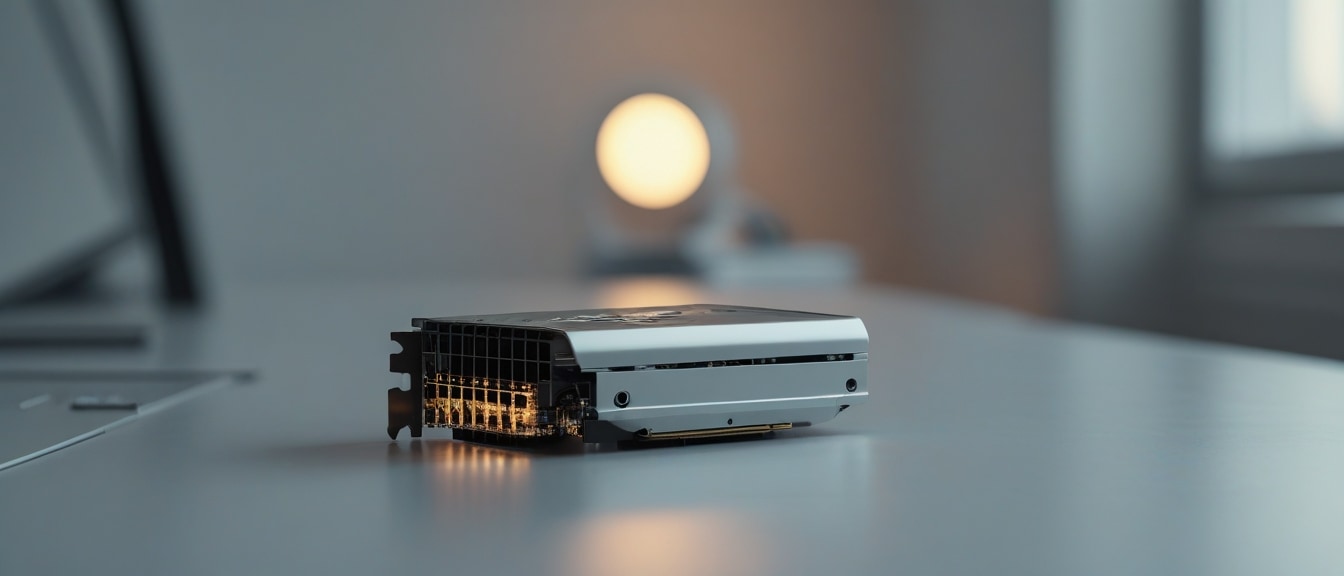
The tradeoff is size. A 30-billion-parameter model is enormous compared to the tiny models phones use for autocomplete, but small compared to the flagship models running in data centers. Glimmer is Meta’s answer to that gap: distilled from a bigger closed model down to something that fits comfortably on the graphics card already inside a gaming laptop.
How Does It Work?
Think of it like the difference between renting a workshop by the hour and owning your own toolbox. A cloud AI model is the rented workshop: powerful, always available, but someone else decides what’s allowed inside and you pay every time you walk in. A local model is the toolbox in your garage — smaller, sure, but it’s yours, it works offline, and nobody’s watching what you build with it.
Technically, running a model locally means loading its weights into your computer’s memory and letting your own processor or graphics card do the math needed to generate each response. Tools like Ollama package this into one command, so you don’t need to understand how the model works internally — just how to type a couple of lines into an app. Compressed versions of the weights, called quantized builds, shrink the download further by trading a small amount of precision for a much smaller file, which is what makes a 30-billion-parameter model realistic to run on a laptop instead of a server rack.
How to Try It Yourself
You don’t need any coding experience to get Glimmer running today. Ollama is the fastest free path, and it works the same way on Mac, Windows, and Linux.
- Go to ollama.com and download the installer for your operating system. It’s free, with no account required.
- Open the app it installs — on Mac and Windows this gives you a simple background program plus a command-line tool.
- Open your computer’s terminal (Terminal on Mac, Command Prompt or PowerShell on Windows) and type:
ollama run muse-glimmer- Wait for the download. The default version is roughly 18GB, so this takes a few minutes depending on your internet speed.
- Once it finishes, you’ll land in a chat prompt right in your terminal. Type a question or task and press enter to see it respond.
- Try something agentic, like asking it to draft a short script, summarize a pasted block of text, or plan out the steps for a task — this is what the model was built to be good at.
If your computer has at least 24GB of memory, you should be able to run this comfortably. Less than that, and look for a smaller quantized version listed on Ollama’s Muse Glimmer page instead of the default.
Tips to Get Better Results
Match the model to your hardware. If responses feel sluggish or your computer struggles, switch to a more compressed quantized build rather than forcing the full-size version — you’ll trade a little quality for a lot of speed.
Give it multi-step tasks, not just questions. Glimmer was built for agent-style work, so it tends to shine more on “plan this out and do it in steps” prompts than on quick trivia.
Keep it updated. Local model tooling moves fast; running ollama pull muse-glimmer again after a few weeks grabs any improvements without a full reinstall.
Don’t expect it to beat the biggest cloud models. A 30B local model trades some raw capability for privacy, cost, and offline access — that’s the deal, not a shortcoming.
Close other heavy apps while it’s running. A local model is the biggest thing your computer’s memory has ever had to hold at once; giving it room helps everything run more smoothly.
Closing Thought
You don’t need a data center, a subscription, or anyone’s permission to have a capable AI running on hardware you already own — you just need one command. Install Ollama tonight, run ollama run muse-glimmer, and ask it to help with one small task on your to-do list. Once you see it respond entirely offline, “AI” stops being something that only lives in someone else’s building.